個展 熟女扇風機
2025年12月2日(火)-20(土)
火ー金:12-19pm.
土:12-18pm.
定休日:日、月、祭日
東京都中央区銀座8-8-1 9伊勢由ビル2階
ワダファインアーツ Y++
「熟女扇風機」という言葉は、僕と友人のあかねが日暮里の街を歩いている時に生まれた。最初からそこに意味はなく、ただの音遊びから始まった。意味を持たないからこそ、自由で、囚われず、何かの一部にもなれるし、さまざまなものとつながることができる。それは、二人にとって活動であり、関係であり、対話となっていった。
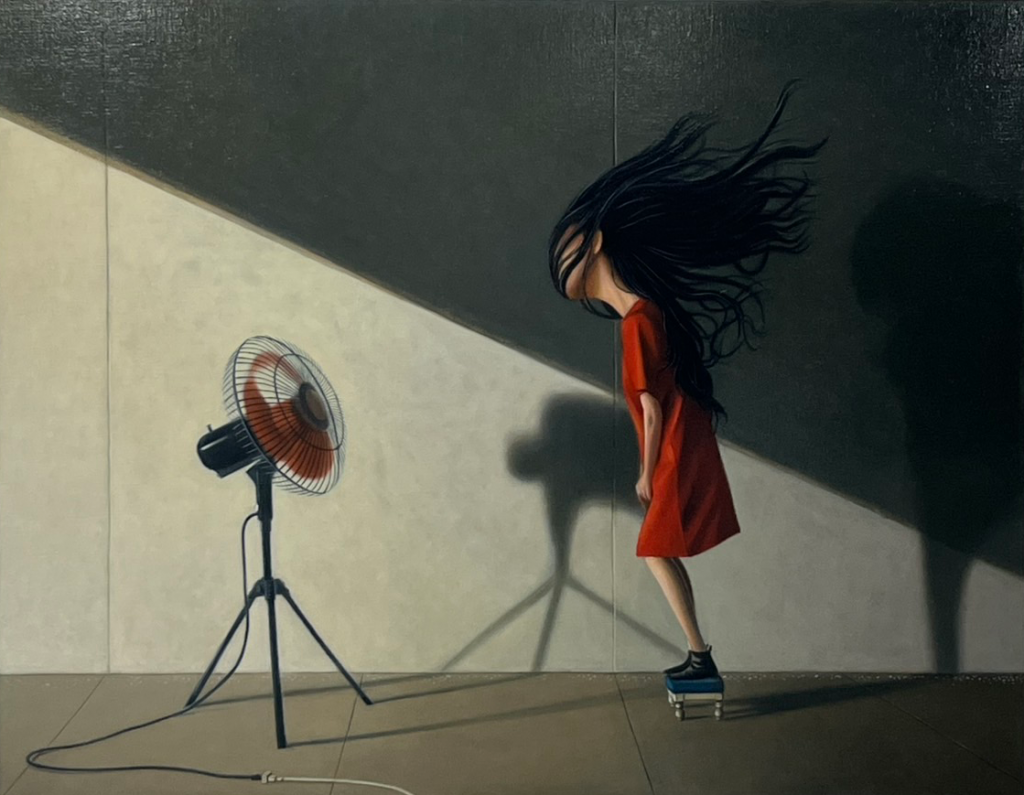
僕は、あかねと扇風機を描こうと思った。真っ赤なワンピースを着て小さな台座に乗り、扇風機の風に吹かれている絵を見て、彼女は涙を流した。「世界との対峙の仕方が、私そのものだなって思った。自分の闘いとか人生を外に見える形にしてもらえたことが、すごく救いになった」と。そして「熟女扇風機」というものを通じて、自分自身も世界に自分として立ってみたいと思ったという。彼女の変化の中に僕がいたことは、僕にとっても大きな出来事だった。彼女の裸の絵を描かなければならないと思った。そして、彼女もその思いに応えてくれた。
裸で一人佇む彼女を描いたとき、自分もそこにいなければならないと思った。ただ、男女の絵を描きたいわけではない。二人のあいだに、意味を持たないけれど象徴的な存在として扇風機を置き、 さらに二人を取り囲むように庭木を描くことで、僕とあかねの関係性は、男性性・女性性といった枠を超えて、もっと別の場所へ行ける気がした。
「熟女扇風機」を通じて生まれたこの作品は、とても個人的なものだ。個人的な経験や視点から生まれる世界や、人と向き合うことで生まれたものを、特別なものとして描きたい。そこには、いつも“自分にしか描けない絵を描きたい”という思いがある。
Solo Exhibition: Jukujo Senpūki
December 2 (Tue) – 20 (Sat), 2025
Tue–Fri: 12:00–19:00
Sat: 12:00–18:00
Closed: Sun, Mon, and national holidays
Wada Fine Arts | Y++
2F, 9 Iseyu Building, 8-8-1 Ginza, Chuo-ku, Tokyo
The word “Jukujo Senpūki” (“Mature Woman – Fan”) wasborn when my friend Akane and I were walking through thestreets of Nippori. From the start, it had no meaning;it began simply as playing with sounds. It’s lack of meaningallows it to be free, unconfined, able to become part ofanything, able to connect with all kinds of things. For us,it became an activity, a relationship, and a form of dialogue.
I decided to paint Akane with a fan. When she saw thepainting of herself standing on a small pedestal wearing abright red one-piece dress, being blown by the fan’s wind,she cried. She said, “The way I confront the world felt like itwas exactly me. Having my own struggles and life turnedinto something that can be seen from the outside — thatsaved me so much.” And she said that through this thingcalled “Jukujo Senpūki,” she wanted to try standing in theworld as her own self too. The fact that I was present insidethe changes she was going through was, for me as well, amajor event. I felt I needed to paint her nude. And sheresponded to that feeling.
When I painted her, alone and nude, I felt that I also neededto be there. But it wasn’t simply that I wanted to paint a manand a woman. By placing the fan between us — somethingwithout meaning yet symbolic — and further paintinggarden trees surrounding us both, I felt that the relationshipbetween me and Akane could move beyond frameworks likemasculinity and femininity, and go somewhere else entirely.
This work that was born through “Jukujo Senpūki” is deeplypersonal. I want to depict the worlds that arise frompersonal experiences and perspectives, and the things thatcome from facing another person, as something special.Within it is always the thought: “I want to paint a picturethat only I can paint.